Journal of Nutrition Research
An official journal of IAPEN India association

Journal of Nutrition Research
DOI: 10.55289/jnutres/v13i2.25.78
Year: 2025, Volume: 13, Issue: 2, Pages: 83-86
Original Article
Bayaskar Sagar1*
1 Independent Public Health Researcher, India.
* Corresponding author
Email: [email protected]
Received Date:11 August 2025, Accepted Date:20 December 2025, Published Date:28 December 2025
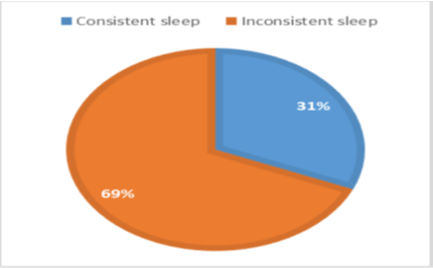
Background: Dietary habits and meal timing are increasingly recognized as critical factors influencing emotional health and sleep quality in young adults. Aim of the study is to explore the relationship between dietary patterns, emotional well-being, and sleep consistency among college students. Materials & Methods: This qualitative study involved in-depth interviews with 35 college students aged 18–45 years (20 females, 15 males). Participants discussed their eating habits, stress levels, emotional responses, and sleep routines. Data were analyzed thematically to identify interconnections. Results: Irregular meal timing was reported by 19 participants (54.3%), with 14 (40%) consuming fast food at least twice weekly. Emotional eating during stress was common (n=15, 42.9%), often linked to irritability (n=18, 51.4%) and mood swings (n=16, 45.7%). Poor dietary patterns correlated with inconsistent sleep schedules (n=24, 68.6%) and morning fatigue. Students with regular meals and lighter evening diets (n=10, 28.6%) reported improved mood stability, reduced anxiety, and better next-day alertness. Conclusion: Unhealthy dietary habits, particularly late-night heavy meals, were associated with emotional instability and disrupted sleep. Promoting regular, balanced eating patterns may improve psychological well-being and sleep consistency in college populations.
1. The prevalence and association of stress with sleep quality among medical students. Journal of Epidemiology and Global Health. 2017; 7 (3). Available from: https://doi.org/10.1016/j.jegh.2017.04.005
2. A Review of Environmental Influences on Food Choices. Annals of Behavioral Medicine. 2009; 38 (S1). Available from: https://doi.org/10.1007/s12160-009-9120-9
3. Dietary patterns and cognitive function in young adults: A systematic review. Nutrients. 2020; 12 (11). Available from: https://doi.org/10.3390/nu12113551
4. Effects of Diet on Sleep Quality. Advances in Nutrition. 2016; 7 (5). Available from: https://doi.org/10.3945/an.116.012336
5. Social interactions, emotion and sleep: A systematic review and research agenda. Sleep Medicine Reviews. 2015; 24 Available from: https://doi.org/10.1016/j.smrv.2014.12.005
6. Lack of sleep as a contributor to obesity in adolescents: impacts on eating and activity behaviors. International Journal of Behavioral Nutrition and Physical Activity. 2016; 13 (1). Available from: https://doi.org/10.1186/s12966-016-0428-0
7. Gaining momentum: Popularization of Epilobium angustifolium as food and recreational tea on the Eastern edge of Europe. Appetite. 2020; 150 Available from: https://doi.org/10.1016/j.appet.2020.104638
8. Relationship Between Diet and Mental Health in Children and Adolescents: A Systematic Review. American Journal of Public Health. 2014; 104 (10). Available from: https://doi.org/10.2105/ajph.2014.302110
9. Healthy dietary indices and risk of depressive outcomes: a systematic review and meta-analysis of observational studies. Molecular Psychiatry. 2019; 24 (7). Available from: https://doi.org/10.1038/s41380-018-0237-8
10. Sugar intake from sweet food and beverages, common mental disorder and depression: Prospective findings from the Whitehall II study. Scientific Reports. 2017; 7 Available from: https://doi.org/10.1038/s41598-017-05649-7
11. Cognitive Performance, Sleepiness, and Mood in Partially Sleep Deprived Adolescents: The Need for Sleep Study. Sleep. 2016; 39 (3). Available from: https://doi.org/10.5665/sleep.5552
12. The Effects of Dietary Improvement on Symptoms of Depression and Anxiety: A Meta-Analysis of Randomized Controlled Trials. Psychosomatic Medicine. 2019; 81 (3). Available from: https://doi.org/10.1097/psy.0000000000000673
13. How emotions affect eating: A five-way model. Appetite. 2008; 50 (1). Available from: https://doi.org/10.1016/j.appet.2007.07.002
14. Psychological Determinants of Emotional Eating in Adolescence. Eating Disorders. 2009; 17 (3). Available from: https://doi.org/10.1080/10640260902848543
15. Relationship between food habits and sleep quality among adolescents in India. Indian Journal of Public Health Research & Development. 2019; 10 (8). Available from: https://doi.org/10.5958/0976-5506.2019.02180.6
16. Short Sleep Duration and Weight Gain: A Systematic Review. Obesity. 2008; 16 (3). Available from: https://doi.org/10.1038/oby.2007.118
17. Meal timing and composition in relation to sleep and cardiometabolic health. Nutrients. 2021; 13 (8). Available from: https://doi.org/10.3390/nu13082572
18. Impact of fast food on sleep quality among university students. Journal of Pakistan Medical Association. 2020; 70 (5). Available from: https://doi.org/10.5455/JPMA.293437
19. Joint association of screen time and physical activity with depressive symptoms in adolescents. Preventive Medicine. 2018; 110 Available from: https://doi.org/10.1016/j.ypmed.2018.02.006
20. Adolescents’ Electronic Media Use at Night, Sleep Disturbance, and Depressive Symptoms in the Smartphone Age. Journal of Youth and Adolescence. 2015; 44 (2). Available from: https://doi.org/10.1007/s10964-014-0176-x
21. Do small differences in hydration status affect mood and mental performance?. Nutrition Reviews. 2015; 73 (suppl 2). Available from: https://doi.org/10.1093/nutrit/nuv045
22. Diet promotes sleep duration and quality. Nutrition Research. 2012; 32 (5). Available from: https://doi.org/10.1016/j.nutres.2012.03.009
23. A Review of Evidence for the Link Between Sleep Duration and Hypertension. American Journal of Hypertension. 2014; 27 (10). Available from: https://doi.org/10.1093/ajh/hpu071
© This is an open-access article distributed under the terms of the Creative Commons Attribution License, which permits unrestricted use, distribution, and reproduction in any medium, provided the original author and source are credited.
Published By India Association for Parenteral and Enteral Nutrition (IAPEN)
Subscribe now for latest articles and news.