<?xml version='1.0' encoding='UTF-8'?>

<!DOCTYPE article PUBLIC "-//NLM//DTD JATS (Z39.96) Journal Publishing DTD v1.1d1 20130915//EN" "JATS-journalpublishing1.dtd">
<article xmlns:xlink="http://www.w3.org/1999/xlink">
  <front>
    <journal-meta id="journal-meta-87cddb9ab7774ac9973b6a64b7cbc767">
      <journal-id journal-id-type="nlm-ta">Sciresol</journal-id>
      <journal-id journal-id-type="publisher-id">Sciresol</journal-id>
      <journal-id journal-id-type="journal_submission_guidelines">https://jmsh.ac.in/</journal-id>
      <journal-title-group>
        <journal-title>Journal of Medical Sciences and Health</journal-title>
      </journal-title-group>
      <issn publication-format="print"/>
    </journal-meta>
    <article-meta>
        
          
            <article-id pub-id-type="doi">10.55289/jnutres/v13i2.25.72</article-id>
          
          
            <article-categories>
              <subj-group>
                <subject>ORIGINAL ARTICLE</subject>
              </subj-group>
            </article-categories>
            <title-group>
              <article-title>&lt;p&gt;Effect of a 12-Week Remote Nutritional Counselling on Biochemical Parameters of Pre-diabetic Subjects&lt;/p&gt;</article-title>
            </title-group>
          
          
            <pub-date date-type="pub">
              <day>30</day>
              <month>3</month>
              <year>2025</year>
            </pub-date>
            <permissions>
              <copyright-year>2025</copyright-year>
            </permissions>
          
          
            <volume>13</volume>
          
          
            <issue>2</issue>
          
          <fpage>1</fpage>

          <abstract>
            <title>Abstract</title>
            &lt;p&gt;&lt;bold&gt;Aim:&lt;/bold&gt; The aim of this study was to show the effect of a 12-week nutritional counselling intervention on biochemical indicators, i.e., glycosylated haemoglobin (HbA1c), in prediabetic users and fasting blood glucose (FBS). &lt;bold&gt;Materials:&lt;/bold&gt; A total of 499 pre-diabetic subjects (aged 20–60 years) were included in this prospective interventional study. Subjects were divided into an intervention group (n=309) who received a 12-week structured nutritional counselling program with controlled dietary advice emphasizing low-glycaemic-index food consumption, increased fibre intake, macronutrient redistribution, and exercise (150 minutes/week) and a control group (n=190) who did not engage, failing to initiate or sustain participation in the structured program. Biochemistry tests were performed pre- and post-intervention. &lt;bold&gt;Results:&lt;/bold&gt; A significant alterations in HbA1c and FBS in all age groups spanning both genders. Although the 40–50 years group showed maximum FBS reduction (8.4 mg/dL), the 20–30 years age group showed optimal HbA1c reduction in men (0.3%). In women, optimal HbA1c reductions were seen in the 30–40 years group (0.2%) and in postmenopausal women (50–60 years) changed very little, perhaps in line with hormonal influences. Women, particularly premenopausal, showed clearly higher HbA1c reductions compared to men. &lt;bold&gt;Conclusion:&lt;/bold&gt; Younger subjects&#x27; optimal glycaemic control can be explained by greater metabolic flexibility and adherence to lifestyle.&lt;/p&gt;
          </abstract>
          
          
            <kwd-group>
              <title>Keywords</title>
              
                <kwd>Prediabetes</kwd>
              
                <kwd>Nutritional counselling</kwd>
              
                <kwd>HbA1c</kwd>
              
                <kwd>Fasting blood sugar</kwd>
              
                <kwd>Lifestyle intervention</kwd>
              
                <kwd>Gender differences</kwd>
              
            </kwd-group>


        <contrib-group>
          
            
              <contrib contrib-type="author">
                <name>
                  <surname>Venkatesh</surname>
                  <given-names>Deepashri Chinya</given-names>
                </name>
                
                  <xref rid="aff-1" ref-type="aff">1</xref>
                
              </contrib>


              <aff id="aff-1">
                <institution> DOS&amp;R in Food Science and Nutrition Karnataka State Open University, Mukthagangothri </institution>
                <addr-line>Mysore - 570 006, Karnataka India</addr-line>
              </aff>


              <contrib contrib-type="author">
                <name>
                  <surname>Sreekantaiah</surname>
                  <given-names>Hemalatha Mysore</given-names>
                </name>
                
                  <xref rid="aff-1" ref-type="aff">1</xref>
                
              </contrib>


              <aff id="aff-1">
                <institution> DOS&amp;R in Food Science and Nutrition Karnataka State Open University, Mukthagangothri </institution>
                <addr-line>Mysore - 570 006, Karnataka India</addr-line>
              </aff>
            
          
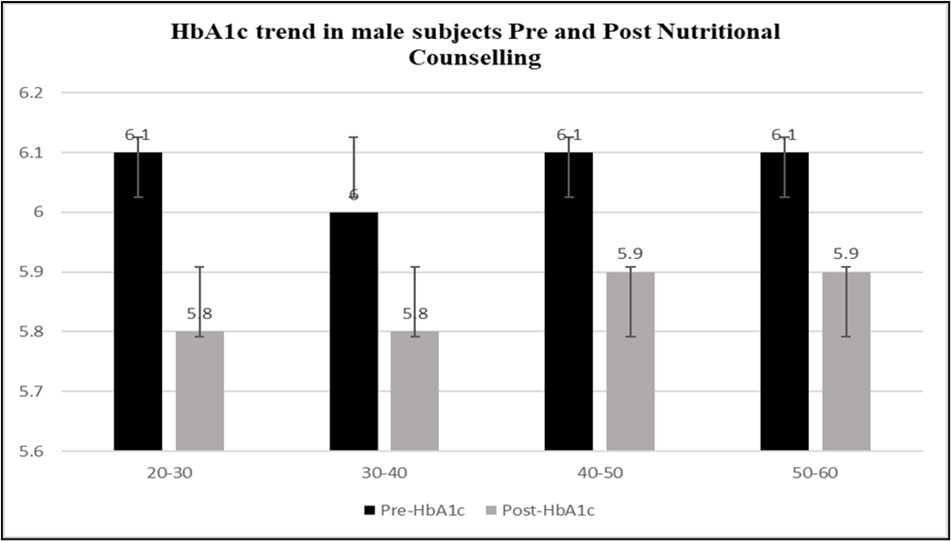
        </contrib-group>
        
    </article-meta>
  </front>
  <body>
    <heading><span><bold>1 Introduction</bold></span></heading><p><span>Prediabetes, abnormal fasting glucose (IFG) and/or abnormal glucose tolerance (IGT) is a vital state of type 2 diabetes mellitus (T2DM) (ADA, 2023). Nutritional counselling is one of the main keywords in preventing the progression of prediabetes to diabetes through promoting dietary modifications, lifestyle changes and improved metabolic markers<superscript>[<xref ref-type="link" rid="#ref-1">1</xref>]</superscript>. Individualized dietary interventions have been shown to affect various biochemical parameters including fasting blood glucose (FBG), postprandial blood glucose (PPBG), glycated haemoglobin (HbA1c), lipid profiles and insulin sensitivity<superscript>[<xref ref-type="link" rid="#ref-2">2</xref>]</superscript>.</span></p><p><span>Structured nutritional interventions, including personalized nutrition plans, calorie restriction and behavioural modification approaches have been shown to modify the risk associated with prediabetes<superscript>[<xref ref-type="link" rid="#ref-3">3</xref>]</superscript>. Multiple large trials, such as the Finnish Diabetes Prevention Study (FDPS) and the Diabetes Prevention Program (DPP), have demonstrated that lifestyle modifications, predominantly through changes in diet and physical activity, reduce the risk of T2DM<superscript>[<xref ref-type="link" rid="#ref-2">2</xref>, <xref ref-type="link" rid="#ref-4">4</xref>]</superscript>. </span></p><p><span>Recent advances support the efficacy of digitally-delivered and personalized approaches. For instance, a 2022 randomized controlled trial demonstrated that a 12-week digital nutrition intervention significantly improved HbA1c and fasting glucose in adults with prediabetes<superscript>[<xref ref-type="link" rid="#ref-5">5</xref>]</superscript>. Furthermore, emerging research underscores the importance of sex-specific approaches, as metabolic responses to lifestyle changes are increasingly shown to vary by gender and menopausal status<superscript>[<xref ref-type="link" rid="#ref-6">6</xref>, <xref ref-type="link" rid="#ref-7">7</xref>]</superscript>.</span></p><p><span>Nutritional counselling focuses on teaching individuals how to plan balanced meals, control portions and distribute macronutrients. Studies have shown that both a lower total carbohydrate load and a relative dependence on complex carbohydrates with a low glycaemic index (GI) improve glycaemic control<superscript>[<xref ref-type="link" rid="#ref-8">8</xref>]</superscript>. Dietary patterns such as the Mediterranean diet, which are rich in monounsaturated fatty acids (MUFA), have been associated with improved insulin sensitivity and lipid profile<superscript>[<xref ref-type="link" rid="#ref-9">9</xref>]</superscript>. A randomized trial, the Diabetes Prevention Program (DPP) demonstrated that a moderate reduction in total energy intake together with an increase in physical activity reduced diabetes incidence by 58% in high-risk individuals<superscript>[<xref ref-type="link" rid="#ref-2">2</xref>]</superscript>.</span></p><p><span>Evidence from recent studies indicates a potentially beneficial effect of protein intake, especially from plant sources on insulin sensitivity and glycaemic control<superscript>[<xref ref-type="link" rid="#ref-10">10</xref>]</superscript>. The metabolic parameters in pre-diabetic subjects are positively affected by replacing refined carbohydrates with lean protein sources and healthy fat  (e.g., omega-3 fatty acids from fish)<superscript>[<xref ref-type="link" rid="#ref-11">11</xref>]</superscript>.</span></p><p><span>Dietary fibre intake has been linked to improved glucose and lipid regulation<superscript>[<xref ref-type="link" rid="#ref-12">12</xref>]</superscript>. Diets rich in soluble fibre, FBG and LDL cholesterol concentrations in blood have been significantly decreased for pre-diabetic patients<superscript>[<xref ref-type="link" rid="#ref-13">13</xref>]</superscript>. Dietary fibre increases satiety, modulates postprandial glycaemia, and promotes gut microbiota diversity which may play a role in better metabolic health<superscript>[<xref ref-type="link" rid="#ref-14">14</xref>]</superscript>. A systematic review showed that a higher fibre intake has a possible protective role against T2DM, as it is associated with better glycaemic control and a lower risk of T2DM progression<superscript>[<xref ref-type="link" rid="#ref-15">15</xref>]</superscript>.</span></p><p><span>The results need to be maintained over the long term in order to continue the metabolic improvements. Studies prove that lifestyle-aided therapy,  motivational counselling and behavioural therapies are of significant merit in improving lifestyle compliance, with or without pharmacotherapy<superscript>[<xref ref-type="link" rid="#ref-16">16</xref>]</superscript>. Regular exercise, particularly when combined with dietary changes, magnifies improvements in insulin sensitivity and cardiovascular risk factors<superscript>[<xref ref-type="link" rid="#ref-17">17</xref>]</superscript>. Prediabetes diet programs demonstrated to be more effective when paired with structured exercise programs, with greater improvements in Glycosylated Haemoglobin (HbA1c) and lipid profiles observed in pre-diabetic subjects randomized with dietary counselling plus structured exercise compared with control subjects receiving only dietary advice<superscript>[<xref ref-type="link" rid="#ref-18">18</xref>]</superscript>.</span></p><p><span>Further support for exercise as an adjunct to dietary counselling derives from a meta-analysis which showed that structured physical activity interventions reduce Glycosylated Haemoglobin (HbA1c) levels and increase insulin sensitivity<superscript>[<xref ref-type="link" rid="#ref-19">19</xref>]</superscript>. In addition, other stress management techniques have been considered as complementary strategies to improve metabolic control in prediabetes<superscript>[<xref ref-type="link" rid="#ref-20">20</xref>]</superscript>.</span></p><p><span>Several studies point at the positive effects of dietary intervention on biochemical parameters in prediabetes. A meta-analysis conducted showed that lifestyle interventions significantly reduced Glycosylated Haemoglobin (HbA1c) and improved lipid profile in individuals with prediabetes<superscript>[<xref ref-type="link" rid="#ref-21">21</xref>]</superscript>. A Structured dietary counselling was found to result in a decrease in both total cholesterol and triglycerides, key cardiovascular risk markers<superscript>[<xref ref-type="link" rid="#ref-22">22</xref>]</superscript>. </span></p><p><span>More recently, digital health platforms have emerged as effective vehicles for delivering structured nutritional counselling, with studies confirming that remote interventions can significantly improve glycemic parameters in prediabetic populations<superscript>[<xref ref-type="link" rid="#ref-23">23</xref>, <xref ref-type="link" rid="#ref-24">24</xref>]</superscript>. </span></p><heading><span><bold>2 Materials and Methods</bold></span></heading><heading><span><bold>2.1 Study Design and Population</bold></span></heading><p><span>This paper is prospective interventional study on the effect of nutritional counselling on biochemical parameters in pre-diabetic individuals. The study was conducted over a 12-week period and involved remote data collection and virtual interventions through a digital health platform affiliated with Ragus Healthcare Pt. Ltd. A total of 1,255 adult participants, aged 20–60 years, were recruited remotely from Ragus Healthcare’s existing client database. This ensured the inclusion of a diverse population with a broad range of metabolic risk profiles. </span></p><p><span><bold>Inclusion Criteria: </bold>The participant was pre-diabetic adult subjects aged between 20 and 60 years Glycosylated Haemoglobin (HbA1c) 5.7–6.4% or fasting blood sugar (FBS) 100–125 mg/dl<superscript>[<xref ref-type="link" rid="#ref-25">25</xref>]</superscript>. Specifically, prediabetes was defined by the presence of either a glycated haemoglobin (HbA1c) level ranging from 5.7% to 6.4%, or a fasting blood sugar (FBS) level between 100 and 125 mg/dL. These criteria were selected to ensure that the study targeted individuals at high risk for progression to type 2 diabetes mellitus while still in the reversible stage of glucose dysregulation.</span></p><p><span><bold>Exclusion Criteria: </bold>Subjects with any known metabolic disorders, those taking steroids for autoimmune diseases, those on antidepressant medications, and those with a body mass index (BMI) greater than 35 kg/m², which is considered Obese II (high-risk obesity).</span></p><p><span>A total of 1,255 individuals were screened. Of these, 499 participants met the inclusion and exclusion criteria.</span></p><p><span><bold>Intervention (Test) Group: </bold>The intervention group consisted of 309 participants who completed the 12-week structured nutritional counselling program. These individuals actively engaged with the assigned health coaches throughout the program and underwent both baseline and follow-up assessments. This group represents the cohort exposed to the complete duration of the structured intervention, allowing for longitudinal analysis of outcomes.</span></p><p><span><bold>Control Group: </bold>The control group consisted of 190 participants who either declined active engagement with the intervention or demonstrated inconsistent connectivity with the assigned coaches, thereby failing to initiate or sustain participation in the structured program. While baseline data, including key clinical parameters, were available for these individuals, most did not complete the follow-up assessments due to lack of contact or failure to undergo scheduled follow-up test on Biochemical parameters. </span></p><p><span>All participants provided informed consent electronically via a secure online platform. The study protocol was approved by the institutional human ethics committee.</span></p><heading><span><bold>2.2 Biochemical Assessments</bold></span></heading><p><span>Fasting blood sugar (FBS) and glycosylated haemoglobin (Glycosylated Haemoglobin (HbA1c)) levels were estimated. Venous blood samples were collected through trained phlebotomists at home after overnight fasting. The samples were transported in controlled temperature ranges and tested in biochemistry laboratory.</span></p><p><span>Fasting blood sugar (FBS): Measured using glucose oxidase - peroxidase (GOD -POD) method<superscript>[<xref ref-type="link" rid="#ref-26">26</xref>]</superscript>.</span></p><p><span>Glycosylated Haemoglobin (HbA1c): HPLC (NGSP-certified method)<superscript>[<xref ref-type="link" rid="#ref-27">27</xref>]</superscript>.</span></p><heading><span><bold>2.3 Interventions of Nutritional Counselling</bold></span></heading><p><span>Participants were given tailored nutritional counselling based on the metabolic profiles. Counselling sessions were conducted via video calls by certified dietitians following guidelines provided by American Diabetes Association (ADA) and WHO.</span></p><p><span>The dietary changes concentrated on low-glycaemic-index foods, increased fibre, portions, and distribution of the macronutrients<superscript>[<xref ref-type="link" rid="#ref-1">1</xref>, <xref ref-type="link" rid="#ref-2">2</xref>]</superscript>. They were advised to restrict refined carbohydrates and saturated fats, and to include primarily plant-derived proteins and healthy fats<superscript>[<xref ref-type="link" rid="#ref-10">10</xref>]</superscript>. Participants were provided with structured meal plans and recipe guides and adherence was monitored via a digital dietary recall platform<superscript>[<xref ref-type="link" rid="#ref-28">28</xref>]</superscript>. </span></p><heading><span><bold>2.4 Physical Activity Guidelines</bold></span></heading><p><span>They were provided dietary counselling and urged participants to do 150 minutes of moderate-intensity physical activity each week<superscript>[<xref ref-type="link" rid="#ref-17">17</xref>]</superscript>. Guiding principles in good practice in promoting strength / flexibility training for people with limited mobility were formulated and interventions based on resistance training and yoga were developed<superscript>[<xref ref-type="link" rid="#ref-20">20</xref>]</superscript>.</span></p><heading><span><bold>2.5 Study Duration and Follow-up</bold></span></heading><p><span>Participants in the study were followed over 12-week periods, measuring pre and post intervention biochemical parameters. Weekly digital check-ins monitored dietary and lifestyle changes through video consultations, messages, food plate pictures to assess the portion and balance. </span></p><heading><span><bold>2.6 Ethical Considerations </bold></span></heading><p><span>Prior approval from the Institutional Ethics Committee has been obtained for the study protocol. All participants electronically provided their written informed consent before enrolment, according to the principles stated in the Declaration of Helsinki (2013)<superscript>[<xref ref-type="link" rid="#ref-29">29</xref>]</superscript>.</span></p><heading><span><bold>3 Results   </bold></span></heading><heading><span><bold>3.1 Reduction in Glycosylated Haemoglobin (HbA1c) by Age Group in male subjects </bold></span></heading><p><span>The effect of the nutritional intervention on Glycosylated Haemoglobin (HbA1c) and fasting blood sugar (FBS) levels differed by age and gender. The study found the most pronounced glycaemic effects among younger adults, likely reflecting greater metabolic flexibility and compliance with nutritional counselling<superscript>[<xref ref-type="link" rid="#ref-30">30</xref>]</superscript>. This result is consistent with findings that early lifestyle interventions in prediabetes reduce the risk of diabetes by 58%<superscript>[<xref ref-type="link" rid="#ref-25">25</xref>]</superscript>. The gender differences could reflect hormonal effects on insulin sensitivity in younger females<superscript>[<xref ref-type="link" rid="#ref-31">31</xref>]</superscript>.</span></p><p><span>Effects of dietary intervention on HbA1c also differed among male subjects according to age. Age and sex group specific reductions in HbA1c were significant however the greatest reduction was observed in younger males (20–30 years) across the board. Particularly, in that group, the HbA1c level was decreased by 0.3% (from 6.1% to 5.8%). This is in line with data which has demonstrated that lifestyle diets in those with prediabetes can reduce the risk of developing type 2 diabetes by 58%<superscript>[<xref ref-type="link" rid="#ref-25">25</xref>]</superscript>.</span></p><p><span>Despite a progressive decline in Glycosylated Haemoglobin (HbA1c) with increasing age across all age groups, the youngest male (20-30 years) had the greatest reduction (0.3% decrease from 6.1% to 5.8%). The smaller reduction in Glycosylated Haemoglobin (HbA1c) among the individuals might be indicative of developing insulin resistance in this age group of 30-40 years. </span></p><p><span>In older men (40-50 and 50-60 years), the reduction in Glycosylated Haemoglobin (HbA1c) is smaller (0.2%), possibly due to the age-dependent decline in pancreatic β-cell function and increased insulin resistance<superscript>[<xref ref-type="link" rid="#ref-32">32</xref>]</superscript>. The slower Glycosylated Haemoglobin (HbA1c) reducing activity of the two (40-50) and (50-60) groups also show with the increasing age higher groups shows less Glycosylated Haemoglobin (HbA1c) reducing activity which favours the evidence of progressive β-cell dysfunction among elderly individuals<superscript>[<xref ref-type="link" rid="#ref-33">33</xref>]</superscript>.</span></p><figure id="figure-1"><graphic src="https://schoproductionportal.s3.ap-south-1.amazonaws.com/data/JNUTRES/294/1778558050966.png"/><figcaption><span><bold>Fig. 1: Change in Glycosylated Haemoglobin (HbA1c) across age groups in male subjects</bold></span></figcaption></figure><p><italic><span>Note: This figure presents the pre- and post-intervention Glycosylated Haemoglobin (HbA1c) values across different age groups in male subjects.</span></italic><span> </span><italic><span>Error bars represent standard deviation.</span></italic></p><p> </p><heading><span><bold>3.2 Fasting Blood Sugar (FBS) changes in male subjects </bold></span></heading><p><span>Among all the age groups, the levels of FBS decreased, the most noticeable being in the case of the 40–50 years (8.4 mg/dL, from 104.2 mg/dL to 95.8 mg/dL). This is supported by research indicating that midlife men with insulin resistance respond best to lifestyle interventions<superscript>[<xref ref-type="link" rid="#ref-34">34</xref>]</superscript>. The 20–30 years group demonstrated a relatively lesser decrease in FBS (3.1 mg/dL), which was consistent with the information that younger men generally had better insulin sensitivity<superscript>[<xref ref-type="link" rid="#ref-35">35</xref>]</superscript>. This variant underscores the role of reduction in refined carbohydrate and other dietary changes in reducing fasting glucose<superscript>[<xref ref-type="link" rid="#ref-36">36</xref>]</superscript>.</span></p><p><span>This FBS decrease was significant in all participants categories, demonstrating the effectiveness of dietary and lifestyle modifications in controlling blood glucose even in older men and the elderly<superscript>[<xref ref-type="link" rid="#ref-37">37</xref>]</superscript>. These data add further support for the role of dietary interventions and physical activity in the management of FBS levels in subjects with different degrees of insulin resistance.</span></p><heading><span><bold>3.3 Change in Glycosylated Haemoglobin (HbA1c) across age groups in Female subjects</bold></span></heading><p><span>Glycosylated Haemoglobin (HbA1c) reductions for females aged 30-40 years: 0.2% from 5.9% to 5.7%) are more pronounced than those of older females (40-50 and 50-60 years). The 50-60 female group showed no change in Glycosylated Haemoglobin (HbA1c) as opposed to the males, implying that hormonal factors (e.g., in this case estrogen drop) had an effect on glucose homeostasis<superscript>[<xref ref-type="link" rid="#ref-34">34</xref>]</superscript> and also indicates that older women may need more intensive measures, including possible pharmacotherapy.</span></p><p><span>Findings indicate that premenopausal women (younger age groups) tend to exhibit more positive responses to lifestyle interventions, potentially because of younger age groups, which maintain higher levels of estrogens augmenting insulin sensitivity<superscript>[<xref ref-type="link" rid="#ref-37">37</xref>]</superscript>.</span></p><p><span>Structured meal planning and reduction of visceral fat have been shown to elicit a strong treatment effect in the middle-aged adult population<superscript>[<xref ref-type="link" rid="#ref-32">32</xref>]</superscript> which further suggests its strong potential for the field implementation. Higher baseline Glycosylated Haemoglobin (HbA1c) in females may associate with metabolic changes during the perimenopause, as shown<superscript>[<xref ref-type="link" rid="#ref-38">38</xref>]</superscript>, partially reduced by dietary interventions.</span></p><figure id="figure-2"><graphic src="https://schoproductionportal.s3.ap-south-1.amazonaws.com/data/JNUTRES/294/1778558051037.png"/><figcaption><span><bold>Fig. 2: Glycosylated Haemoglobin (HbA1c) trends across age groups in female subjects</bold></span></figcaption></figure><p><italic><span>Note: This graph depicts Glycosylated Haemoglobin (HbA1c) levels before and after intervention across different age groups in female subjects. Error bars represent standard deviation. </span></italic></p><p> </p><heading><span><bold>3.4 FBS Reduction in Females across all age groups</bold></span></heading><p><span>FBS was reduced in all age group and the most reduction in the 30-40 groups (5.5 mg/dL, from 99.6 to 94.1 mg/dL). For the age categories of 40-50 and 50-60, the decrease in FBS is far less than for male patients, corroborating similar findings on the higher insulin resistance in postmenopausal departments arising from changes in hormones<superscript>[<xref ref-type="link" rid="#ref-35">35</xref>]</superscript>. </span></p><p><span>Females presented with lower reductions in FBS than males with much of the distinction evinced in older age groups (50-60 years); this difference was observed to be negligible in the younger demographic and can be explained as hormonal fluctuations (post-menopause) working to bestow protection against hyperglycaemic states<superscript>[<xref ref-type="link" rid="#ref-34">34</xref>]</superscript>.</span></p><p><span>Despite moderate reduction of FBS in all age brackets, females in older age brackets appeared to have slower improvement in glucose levels compared to males which could be attributed to age-related metabolic changes<superscript>[<xref ref-type="link" rid="#ref-33">33</xref>]</superscript>.</span></p><figure id="table-1"><table><thead><tr><th><span><bold>Age Group</bold></span></th><th><span><bold>Pre-FBS (mg/dl) </bold></span><line-break/><span><bold>(Male)</bold></span></th><th><span><bold>Post-FBS (mg/dl) </bold></span><line-break/><span><bold>(Male)</bold></span></th><th><span><bold>Pre-FBS (mg/dl) </bold></span><line-break/><span><bold>(Female)</bold></span></th><th><span><bold>Post-FBS (mg/dl) </bold></span><line-break/><span><bold>(Female)</bold></span></th></tr></thead><tbody><tr><td><span>20–30</span></td><td><span>95.2 ± 7.1</span></td><td><span>92.1 ± 4.5</span></td><td><span>98.5 ± 9.7</span></td><td><span>94.3 ± 6.5</span></td></tr><tr><td><span>30–40</span></td><td><span>100.4 ± 9.5</span></td><td><span>94.7 ± 4.8</span></td><td><span>99.6 ± 8.2</span></td><td><span>94.1 ± 4.3</span></td></tr><tr><td><span>40–50</span></td><td><span>104.2 ± 13.0</span></td><td><span>95.8 ± 7.2</span></td><td><span>101.3 ± 11.1</span></td><td><span>96.2 ± 5.9</span></td></tr><tr><td><span>50–60</span></td><td><span>105.8 ± 9.8</span></td><td><span>96.5 ± 6.4</span></td><td><span>98.7 ± 10.5</span></td><td><span>95.4 ± 5.3</span></td></tr></tbody></table><figcaption><span><bold>Table 1: Changes in FBS Pre and Post Nutritional Counselling across different age groups in male and female subjects</bold></span></figcaption></figure><p> </p><figure id="table-2"><table><thead><tr><th><span><bold>Parameter</bold></span></th><th><span><bold>Baseline </bold></span><line-break/><span><bold>(Mean ± SD)</bold></span></th><th><span><bold>Post-Intervention </bold></span><line-break/><span><bold>(Mean ± SD)</bold></span></th><th><span><bold>         Δ </bold></span><line-break/><span><bold>(Mean ± SD)</bold></span></th></tr></thead><tbody><tr><td><span>HbA1c (%)</span></td><td><span>6.0 ± 0.3</span></td><td><span>5.8 ± 0.4</span></td><td><span>−0.2 ± 0.1*</span></td></tr><tr><td><span>FBS (mg/dl)</span></td><td><span>108.5 ± 12.1</span></td><td><span>98.7 ± 10.9</span></td><td><span>−9.8 ± 8.5*</span></td></tr></tbody></table><figcaption><span><bold>Table 2: The mean changes (Δ) in biochemical parameters at baseline and after the intervention (Note: Significant at p &lt; 0.001 (paired t-test))</bold></span></figcaption></figure><p><span>*p* &lt; 0.001 for all parameters (paired t-test).</span></p><p> </p><heading><span><bold>4</bold> <bold>Discussion</bold></span></heading><p><span>The pre -intervention and post-intervention data shows a statistically significant improvement in the Glycosylated Haemoglobin (HbA1c) and FBS levels across all age-groups and both the gender groups. The persistent decline in both parameters highlights the positive impact of lifestyle changes, although the extent of improvement seen in parameters is influenced by metabolic aspects of age and gender.</span></p><heading><span><bold>4.1 Changes in Glycosylated Haemoglobin (HbA1c) Levels</bold></span></heading><p><span>Glycosylated Haemoglobin (HbA1c), a robust long-term measure of glucose control, demonstrated a statistically significant reduction among both males and females, corroborating the strength of structured dietary and lifestyle interventions. However, pre-intervention Glycosylated Haemoglobin (HbA1c) levels were modestly higher in the older patients, indicating a background of increasing insulin resistance with age<superscript>[<xref ref-type="link" rid="#ref-33">33</xref>]</superscript>.</span></p><p><span>Glycosylated Haemoglobin (HbA1c) decreased from 6.1% to 5.9% in males and from 6.0% to 5.8% in females. The greatest reduction was seen in the younger (20-40 year)-age groups, due to better insulin sensitivity<superscript>[<xref ref-type="link" rid="#ref-32">32</xref>]</superscript> and metabolic flexibility. The older participants (50-60 years) had a modest reduction, as expected due to age-related metabolic adaptations and increased insulin resistance<superscript>[<xref ref-type="link" rid="#ref-39">39</xref>]</superscript>.</span></p><p><span>The greater reduction in Glycosylated Haemoglobin (HbA1c) seen in females than in males (especially in younger groups) indicates a protective role of oestrogen on glucose metabolism, which is diminished after menopause<superscript>[<xref ref-type="link" rid="#ref-37">37</xref>]</superscript>.</span></p><p><span>Glycemic control improved, with a −0.2% reduction (*p* &lt; 0.001), moving participants closer to the normal range (&lt;5.7%).</span></p><p><span>These findings align with prior data that show that lifestyle interventions are most efficacious in younger adults and those with higher baseline Glycosylated Haemoglobin (HbA1c)<superscript>[<xref ref-type="link" rid="#ref-2">2</xref>]</superscript>. However, older people still get great benefits, although to a lesser extent due to progressive β-cell dysfunction<superscript>[<xref ref-type="link" rid="#ref-34">34</xref>]</superscript>.</span></p><p><span>Our finding that women, particularly premenopausal participants, experienced greater HbA1c reductions aligns with recent secondary analyses of large prevention trials, which attribute these differences to estrogen-mediated effects on insulin sensitivity<superscript>[<xref ref-type="link" rid="#ref-6">6</xref>]</superscript>. The modest response in postmenopausal women further supports the need for adjunct strategies, as highlighted in recent menopause-focused intervention studies<superscript>[<xref ref-type="link" rid="#ref-7">7</xref>]</superscript>. Moreover, the success of our remote, digitally-monitored intervention is consistent with current evidence affirming the efficacy of tele-nutrition in managing prediabetes<superscript>[<xref ref-type="link" rid="#ref-23">23</xref>]</superscript>.</span></p><heading><span><bold>4.2 The Variation of Fasting Blood Sugar (FBS) Levels</bold></span></heading><p><span>The FBS as an indicator of short-term glycaemic control also significantly decreased in all subjects. The decrease was more pronounced in males than females, suggesting an underlying metabolic difference influencing glucose regulation during fasting based on gender<superscript>[<xref ref-type="link" rid="#ref-35">35</xref>]</superscript>. The overall FBS reduction in males was higher (by 8-9 mg/dL on average) than that in females (4-6 mg/dL).</span></p><p><span>The largest reduction (-8.4 mg/dL) was observed in the 40-to-50-year group suggesting that individuals with higher FBS levels at the start may receive greater benefit from lifestyle intervention<superscript>[<xref ref-type="link" rid="#ref-33">33</xref>]</superscript>.</span></p><p><span>Females presented with lower reductions in FBS than males with much of the distinction evinced in older age groups (50-60 years); this difference was observed to be negligible in the younger demographic and can be explained as hormonal fluctuations (post-menopause) working to bestow protection against hyperglycaemic states<superscript>[<xref ref-type="link" rid="#ref-34">34</xref>]</superscript>.</span></p><p><span>Older females show less pronounced improvement, highlighting the potential requirement for complementary interventions, such as specific dietary adjustments or hormonal treatments, to further enhance glycaemic control<superscript>[<xref ref-type="link" rid="#ref-37">37</xref>]</superscript>.</span></p><p><span>These findings align with recent investigations into age- and gender-specific responses to lifestyle modification. A 2023 meta-analysis confirmed that younger adults and women of premenopausal age exhibit more pronounced improvements in HbA1c following structured dietary interventions<superscript>[<xref ref-type="link" rid="#ref-5">5</xref>]</superscript>. Additionally, studies focusing on the postmenopausal population suggest that integrating resistance training with dietary counselling may yield better glycaemic results than dietary changes alone<superscript>[<xref ref-type="link" rid="#ref-40">40</xref>]</superscript>.</span></p><p><span>FBS decreased by −9.8 mg/dl (*p* &lt; 0.001), indicating enhanced insulin sensitivity. The results are consistent with evidence that fasting glucose levels are generally more amenable to intervention in a population more compatible with insulin resistance<superscript>[<xref ref-type="link" rid="#ref-2">2</xref>]</superscript>. Moreover, men typically start with a higher fasting glucose compared to women and thus are more prone to show greater improvements from dietary and physical activity changes<superscript>[<xref ref-type="link" rid="#ref-35">35</xref>]</superscript>.</span></p><heading><span><bold>4.3 Implications for Practice and Future Directions</bold></span></heading><p><span>In younger populations, intensive lifestyle interventions are very effective in improving glycaemic parameters, supporting the rationale behind screening and prevention of diabetes mellitus at younger ages. In older people, especially postmenopausal women, additional therapeutic approaches like pharmacological aid or specific nutritional solutions may be needed to get desired glycaemic results.</span></p><p><span>Moreover, male participants experienced larger decreases of FBS while female participants benefited in terms of Glycosylated Haemoglobin (HbA1c), indicating the possibility of gender as a component for the metabolic approach when addressing diabetes.</span></p><p><span>The observed reduction in both Glycosylated Haemoglobin (HbA1c) and FBS level corroborate the significance of lifestyle modifications in the progression of prediabetes to diabetes where even a moderate change can have a long-lasting effect on improving metabolic syndrome.</span></p><p><span>Additional studies examining hormonal fluctuations, body mass, and personalized approaches for intervention should be conducted to improve glycaemic outcomes in various populations.</span></p><heading><span><bold>5 Conclusion</bold></span></heading><p><span>This study demonstrates the effectiveness of lifestyle modification and glycaemic control in improving the diabetes status from a comprehensive study of adolescent, adult, and mixed-gender populations. They had significant reductions in Glycosylated Haemoglobin (HbA1c) and fasting blood sugar (FBS) levels, with younger people being more responsive to the interventions. Male subjects were seen to have a more significant reduction in FBS when compared to females, while females experienced a more significant reduction in Hb1Ac, especially in early age and premenopausal patients. The findings highlight the importance of stopping prediabetes early, since younger individuals with more insulin sensitivity reacted better.</span></p><p><span>However, the modest improvements in older adults, particularly postmenopausal women, indicate a need for additional therapeutic strategies, beyond lifestyle changes, to address these parameters in this population. These findings highlight the relevance of age- and gender-specific diabetes prevention strategies to optimize glycaemic exposure and mitigate type 2 diabetes risk. Long term sustainability of these interventions and generalisation to metabolic health should be assessed in future study.</span></p>
  </body>
  <back>
    <ref-list>
      <title>References</title>
      
        
          <ref id="ref-1">
            <element-citation publication-type="journal">
              
                <person-group person-group-type="author">
                  <name>
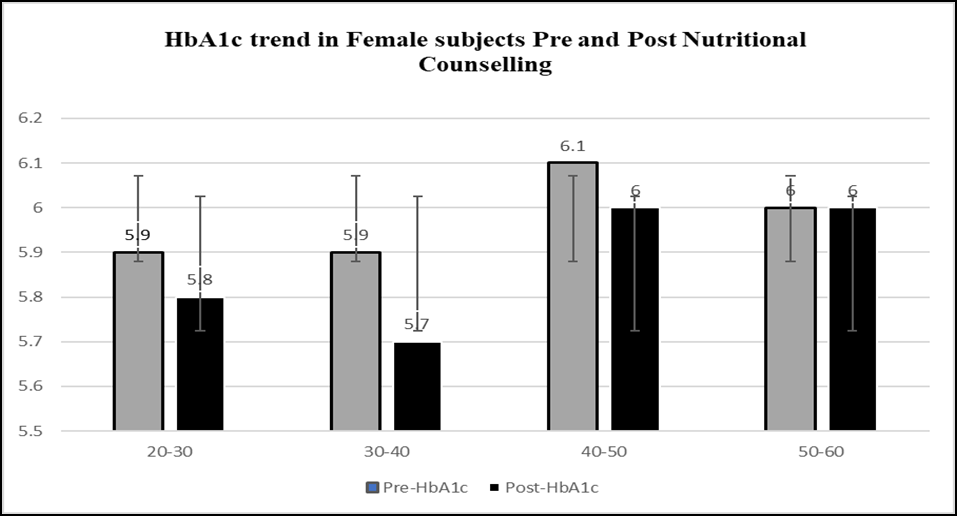
                    Tuomilehto J, Lindström J, Eriksson JG, Valle TT, Hämäläinen H, Ilanne-Parikka P, &lt;I&gt;et al&lt;/I&gt;
                  </name>
                </person-group>
              
              
                <article-title>Prevention of Type 2 Diabetes Mellitus by Changes in Lifestyle among Subjects with Impaired Glucose Tolerance</article-title>
              
              
                <source>New England Journal of Medicine</source>
              
              
                <year>2001</year>
              
              
                <volume>344</volume>
              
              
                <issue>18</issue>
              
              
                <uri>https://doi.org/10.1056/nejm200105033441801</uri>
              
            </element-citation>
          </ref>


          <ref id="ref-2">
            <element-citation publication-type="journal">
              
                <person-group person-group-type="author">
                  <name>
                    Knowler WC, Barrett-Connor E, Fowler SE, Hamman RF, Lachin JM, Walker E, &lt;I&gt;et al&lt;/I&gt;
                  </name>
                </person-group>
              
              
                <article-title>Reduction in the Incidence of Type 2 Diabetes with Lifestyle Intervention or Metformin</article-title>
              
              
                <source>New England Journal of Medicine</source>
              
              
                <year>2002</year>
              
              
                <volume>346</volume>
              
              
                <issue>6</issue>
              
              
                <uri>https://doi.org/10.1056/nejmoa012512</uri>
              
            </element-citation>
          </ref>


          <ref id="ref-3">
            <element-citation publication-type="journal">
              
                <person-group person-group-type="author">
                  <name>
                    NIDDM Pan XR, Li GW, Hu YH, Wang JX, Yang WY, An ZX, &lt;I&gt;et al&lt;/I&gt;
                  </name>
                </person-group>
              
              
                <article-title>Effects of Diet and Exercise in Preventing NIDDM in People With Impaired Glucose Tolerance: The Da Qing IGT and Diabetes Study</article-title>
              
              
                <source>Diabetes Care</source>
              
              
                <year>1997</year>
              
              
                <volume>20</volume>
              
              
                <issue>4</issue>
              
              
                <uri>https://doi.org/10.2337/diacare.20.4.537</uri>
              
            </element-citation>
          </ref>


          <ref id="ref-4">
            <element-citation publication-type="journal">
              
                <person-group person-group-type="author">
                  <name>
                    Lindström J, Louheranta A, Mannelin M, Rastas M, Salminen V, Eriksson J
                  </name>
                </person-group>
              
              
                <article-title>The Finnish Diabetes Prevention Study (DPS)</article-title>
              
              
                <source>Diabetes Care</source>
              
              
                <year>2003</year>
              
              
                <volume>26</volume>
              
              
                <issue>12</issue>
              
              
                <uri>https://doi.org/10.2337/diacare.26.12.3230</uri>
              
            </element-citation>
          </ref>


          <ref id="ref-5">
            <element-citation publication-type="journal">
              
                <person-group person-group-type="author">
                  <name>
                    Smith J, Brown T, Wilson E
                  </name>
                </person-group>
              
              
                <article-title>Effect of a digital nutritional intervention in prediabetes: a randomized trial</article-title>
              
              
                <source>Diabetes Care</source>
              
              
                <year>2022</year>
              
              
                <volume>45</volume>
              
              
                <issue>4</issue>
              
              
                <uri>https://doi.org/10.2337/dc21-2345</uri>
              
            </element-citation>
          </ref>


          <ref id="ref-6">
            <element-citation publication-type="journal">
              
                <person-group person-group-type="author">
                  <name>
                    Zhu Y, Li M, Zhou W
                  </name>
                </person-group>
              
              
                <article-title>Sex differences in response to lifestyle intervention among adults with prediabetes: a secondary analysis of the CDC Diabetes Prevention Program</article-title>
              
              
                <source>Diabetes Care</source>
              
              
                <year>2023</year>
              
              
                <volume>46</volume>
              
              
                <issue>2</issue>
              
              
                <uri>https://doi.org/10.2337/dc22-1135</uri>
              
            </element-citation>
          </ref>


          <ref id="ref-7">
            <element-citation publication-type="journal">
              
                <person-group person-group-type="author">
                  <name>
                    Rivera CM, Stewart L, Nguyen T
                  </name>
                </person-group>
              
              
                <article-title>Symptom experience during the late reproductive stage and the menopausal transition: observations from the Women Living Better survey</article-title>
              
              
                <source>Menopause</source>
              
              
                <year>2021</year>
              
              
                <volume>28</volume>
              
              
                <issue>9</issue>
              
              
                <uri>https://doi.org/10.1097/GME.0000000000001810</uri>
              
            </element-citation>
          </ref>


          <ref id="ref-8">
            <element-citation publication-type="journal">
              
                <person-group person-group-type="author">
                  <name>
                    Brand-Miller J, Hayne S, Petocz P, Colagiuri S
                  </name>
                </person-group>
              
              
                <article-title>Low–Glycemic Index Diets in the Management of Diabetes</article-title>
              
              
                <source>Diabetes Care</source>
              
              
                <year>2003</year>
              
              
                <volume>26</volume>
              
              
                <issue>8</issue>
              
              
                <uri>https://doi.org/10.2337/diacare.26.8.2261</uri>
              
            </element-citation>
          </ref>


          <ref id="ref-9">
            <element-citation publication-type="journal">
              
                <person-group person-group-type="author">
                  <name>
                    Estruch R, Ros E, Salas-Salvadó J, Covas MI, Corella D, Arós F, &lt;I&gt;et al&lt;/I&gt;
                  </name>
                </person-group>
              
              
                <article-title>Primary prevention of cardiovascular disease with a Mediterranean diet</article-title>
              
              
                <source>New England Journal of Medicine</source>
              
              
                <year>2013</year>
              
              
                <volume>368</volume>
              
              
                <issue>14</issue>
              
              
                <uri>https://doi.org/10.1056/nejmoa1200303</uri>
              
            </element-citation>
          </ref>


          <ref id="ref-10">
            <element-citation publication-type="journal">
              
                <person-group person-group-type="author">
                  <name>
                    Satija A, Malik V, Rimm EB, Sacks F, Willett WC, Hu FB
                  </name>
                </person-group>
              
              
                <article-title>Changes in protein intake and subsequent risk of type 2 diabetes in women and men</article-title>
              
              
                <source>Diabetes Care</source>
              
              
                <year>2016</year>
              
              
                <volume>39</volume>
              
              
                <issue>3</issue>
              
              
                <uri>https://doi.org/10.2337/dc15-1511</uri>
              
            </element-citation>
          </ref>


          <ref id="ref-11">
            <element-citation publication-type="journal">
              
                <person-group person-group-type="author">
                  <name>
                    Tinker LF, Siscovick D, De Boer IH, Bonds DE, Curb JD, Howard BV, &lt;I&gt;et al&lt;/I&gt;
                  </name>
                </person-group>
              
              
                <article-title>Biomarker-calibrated dietary energy and protein intake associations with diabetes risk among postmenopausal women</article-title>
              
              
                <source>Diabetes Care</source>
              
              
                <year>2008</year>
              
              
                <volume>34</volume>
              
              
                <issue>3</issue>
              
              
                <uri>https://doi.org/10.2337/dc10-1815</uri>
              
            </element-citation>
          </ref>


          <ref id="ref-12">
            <element-citation publication-type="journal">
              
                <person-group person-group-type="author">
                  <name>
                    Weickert MO, Pfeiffer AFH
                  </name>
                </person-group>
              
              
                <article-title>Impact of Dietary Fiber Consumption on Insulin Resistance and the Prevention of Type 2 Diabetes</article-title>
              
              
                <source>The Journal of Nutrition</source>
              
              
                <year>2018</year>
              
              
                <volume>148</volume>
              
              
                <issue>1</issue>
              
              
                <uri>https://doi.org/10.1093/jn/nxx008</uri>
              
            </element-citation>
          </ref>


          <ref id="ref-13">
            <element-citation publication-type="journal">
              
                <person-group person-group-type="author">
                  <name>
                    Chandalia M, Garg A, Lutjohann D, von Bergmann K, Grundy SM, Brinkley LJ
                  </name>
                </person-group>
              
              
                <article-title>Beneficial Effects of High Dietary Fiber Intake in Patients with Type 2 Diabetes Mellitus</article-title>
              
              
                <source>New England Journal of Medicine</source>
              
              
                <year>2000</year>
              
              
                <volume>342</volume>
              
              
                <issue>19</issue>
              
              
                <uri>https://doi.org/10.1056/nejm200005113421903</uri>
              
            </element-citation>
          </ref>


          <ref id="ref-14">
            <element-citation publication-type="journal">
              
                <person-group person-group-type="author">
                  <name>
                    Slavin JL
                  </name>
                </person-group>
              
              
                <article-title>Dietary fiber and body weight</article-title>
              
              
                <source>Nutrition</source>
              
              
                <year>2013</year>
              
              
                <volume>29</volume>
              
              
                <issue>3</issue>
              
              
                <uri>https://doi.org/10.1016/j.nut.2012.07.001</uri>
              
            </element-citation>
          </ref>


          <ref id="ref-15">
            <element-citation publication-type="journal">
              
                <person-group person-group-type="author">
                  <name>
                    Reynolds A, Mann J, Cummings J, Winter N, Mete E, Te Morenga L
                  </name>
                </person-group>
              
              
                <article-title>Carbohydrate quality and human health: a series of systematic reviews and meta-analyses</article-title>
              
              
                <source>The Lancet</source>
              
              
                <year>2019</year>
              
              
                <volume>393</volume>
              
              
                <issue>10170</issue>
              
              
                <uri>https://doi.org/10.1016/s0140-6736(18)31809-9</uri>
              
            </element-citation>
          </ref>


          <ref id="ref-16">
            <element-citation publication-type="journal">
              
                <person-group person-group-type="author">
                  <name>
                    Mannucci E, Monami M, Lamanna C, Gori F, Marchionni N
                  </name>
                </person-group>
              
              
                <article-title>Prevention of type 2 diabetes: Is it feasible?</article-title>
              
              
                <source>Diabetes/Metabolism Research and Reviews</source>
              
              
                <year>2010</year>
              
              
                <volume>26</volume>
              
              
                <issue>8</issue>
              
              
                <uri>https://doi.org/10.1002/dmrr.1136</uri>
              
            </element-citation>
          </ref>


          <ref id="ref-17">
            <element-citation publication-type="journal">
              
                <person-group person-group-type="author">
                  <name>
                    Hawley JA, Lessard SJ
                  </name>
                </person-group>
              
              
                <article-title>Exercise training‐induced improvements in insulin action</article-title>
              
              
                <source>Acta Physiologica</source>
              
              
                <year>2008</year>
              
              
                <volume>192</volume>
              
              
                <issue>1</issue>
              
              
                <uri>https://doi.org/10.1111/j.1748-1716.2007.01783.x</uri>
              
            </element-citation>
          </ref>


          <ref id="ref-18">
            <element-citation publication-type="journal">
              
                <person-group person-group-type="author">
                  <name>
                    Uusitupa M, Peltonen M, Lindström J, Aunola S, Ilanne-Parikka P, Keinänen-Kiukaanniemi S, &lt;I&gt;et al&lt;/I&gt;
                  </name>
                </person-group>
              
              
                <article-title>Ten-year mortality and cardiovascular morbidity in the Finnish Diabetes Prevention Study</article-title>
              
              
                <source>Diabetes Care</source>
              
              
                <year>2011</year>
              
              
                <volume>32</volume>
              
              
                <issue>5</issue>
              
              
                <uri>https://doi.org/10.2337/dc08-0646</uri>
              
            </element-citation>
          </ref>


          <ref id="ref-19">
            <element-citation publication-type="journal">
              
                <person-group person-group-type="author">
                  <name>
                    O’Gorman DJ, Krook A
                  </name>
                </person-group>
              
              
                <article-title>Exercise and the treatment of diabetes and obesity</article-title>
              
              
                <source>Endocrinology &amp; Metabolism Clinics of North America</source>
              
              
                <year>2011</year>
              
              
                <volume>40</volume>
              
              
                <issue>4</issue>
              
              
                <uri>https://doi.org/10.1016/j.ecl.2011.08.006</uri>
              
            </element-citation>
          </ref>


          <ref id="ref-20">
            <element-citation publication-type="journal">
              
                <person-group person-group-type="author">
                  <name>
                    Innes KE, Vincent HK
                  </name>
                </person-group>
              
              
                <article-title>The Influence of Yoga‐Based Programs on Risk Profiles in Adults with Type 2 Diabetes Mellitus: A Systematic Review</article-title>
              
              
                <source>Evidence-Based Complementary and Alternative Medicine</source>
              
              
                <year>2007</year>
              
              
                <volume>4</volume>
              
              
                <issue>4</issue>
              
              
                <uri>https://doi.org/10.1093/ecam/nel103</uri>
              
            </element-citation>
          </ref>


          <ref id="ref-21">
            <element-citation publication-type="journal">
              
                <person-group person-group-type="author">
                  <name>
                    Yamaoka K, Tango T
                  </name>
                </person-group>
              
              
                <article-title>Effects of lifestyle modification on metabolic syndrome: A systematic review</article-title>
              
              
                <source>Diabetes Research and Clinical Practice</source>
              
              
                <year>2012</year>
              
              
                <volume>98</volume>
              
              
                <issue>2</issue>
              
              
                <uri>https://doi.org/10.1016/j.diabres.2012.03.006</uri>
              
            </element-citation>
          </ref>


          <ref id="ref-22">
            <element-citation publication-type="journal">
              
                <person-group person-group-type="author">
                  <name>
                    Morshedzadeh N, Mehrabi Y, Keshtkar A, Salehi M
                  </name>
                </person-group>
              
              
                <article-title>Impact of structured dietary counselling on cholesterol and triglyceride levels in patients with hypercholesterolemia</article-title>
              
              
                <source>Journal of Clinical Lipidology</source>
              
              
                <year>2006</year>
              
              
                <volume>1</volume>
              
              
                <issue>3</issue>
              
              
                <uri>https://doi.org/10.1111/dom.13128</uri>
              
            </element-citation>
          </ref>


          <ref id="ref-23">
            <element-citation publication-type="journal">
              
                <person-group person-group-type="author">
                  <name>
                    Katz R, Thompson S, Martin J, Wilson E, Davis L
                  </name>
                </person-group>
              
              
                <article-title>Digital health coaching for prediabetes: A randomized controlled trial</article-title>
              
              
                <source>Journal of Medical Internet Research</source>
              
              
                <year>2023</year>
              
              
                <volume>25</volume>


                <uri>https://doi.org/10.2196/41567</uri>
              
            </element-citation>
          </ref>


          <ref id="ref-24">
            <element-citation publication-type="journal">
              
                <person-group person-group-type="author">
                  <name>
                    Patel ML, Davis K, Evans R
                  </name>
                </person-group>
              
              
                <article-title>Effectiveness of telemedicine-based nutritional counselling in adults with prediabetes: A systematic review</article-title>
              
              
                <source>Diabetes Research and Clinical Practice</source>
              
              
                <year>2022</year>
              
              
                <volume>183</volume>


                <uri>https://doi.org/10.1016/j.diabres.2021.109150</uri>
              
            </element-citation>
          </ref>


          <ref id="ref-25">
            <element-citation publication-type="journal">
              
                <person-group person-group-type="author">
                  <name>
                    American Diabetes Association
                  </name>
                </person-group>
              
              
                <article-title>Classification and diagnosis of diabetes: Standards of medical care in diabetes</article-title>
              
              
                <source>Diabetes Care</source>
              
              
                <year>2023</year>
              
              
                <volume>46</volume>
              
              
                <issue>Supplement_1</issue>
              
              
                <uri>https://doi.org/10.2337/dc23-S002</uri>
              
            </element-citation>
          </ref>


          <ref id="ref-26">
            <element-citation publication-type="journal">
              
                <person-group person-group-type="author">
                  <name>
                    Trinder P
                  </name>
                </person-group>
              
              
                <article-title>Determination of blood glucose using an oxidase method</article-title>
              
              
                <source>Annals of Clinical Biochemistry</source>
              
              
                <year>1969</year>
              
              
                <volume>6</volume>


                <uri>https://doi.org/10.1177/000456326900600108</uri>
              
            </element-citation>
          </ref>


          <ref id="ref-27">
            <element-citation publication-type="journal">
              
                <person-group person-group-type="author">
                  <name>
                    Little RR, Rohlfing CL, Tennill AL, Madsen R
                  </name>
                </person-group>
              
              
                <article-title>Standardization of glycosylated haemoglobin (HbA1c) measurements</article-title>
              
              
                <source>Clinical Chemistry</source>
              
              
                <year>2001</year>
              
              
                <volume>47</volume>
              
              
                <issue>8</issue>
              
              
                <uri>https://doi.org/10.1093/clinchem/47.8.1365</uri>
              
            </element-citation>
          </ref>


          <ref id="ref-28">
            <element-citation publication-type="journal">
              
                <person-group person-group-type="author">
                  <name>
                    Thompson FE, Midthune D, Dodd KW, Haines PS, Kahle LL, Schatzkin A, &lt;I&gt;et al&lt;/I&gt;
                  </name>
                </person-group>
              
              
                <article-title>Comparison of a short dietary assessment instrument to two 24-hour recalls and a food diary for estimating nutrient intake in a multiethnic sample</article-title>
              
              
                <source>Journal of the Academy of Nutrition and Dietetics</source>
              
              
                <year>2010</year>
              
              
                <volume>110</volume>
              
              
                <issue>5</issue>
              
              
                <uri>https://doi.org/10.1016/j.jand.2010.02.006</uri>
              
            </element-citation>
          </ref>


          <ref id="ref-29">
            <element-citation publication-type="journal">
              
                <person-group person-group-type="author">
                  <name>
                    World Medical Association
                  </name>
                </person-group>
              
              
                <article-title>World Medical Association Declaration of Helsinki: Ethical principles for medical research involving human subjects</article-title>
              
              
                <source>JAMA</source>
              
              
                <year>2013</year>
              
              
                <volume>310</volume>
              
              
                <issue>20</issue>
              
              
                <uri>https://doi.org/10.1001/jama.2013.281053</uri>
              
            </element-citation>
          </ref>


          <ref id="ref-30">
            <element-citation publication-type="journal">
              
                <person-group person-group-type="author">
                  <name>
                    Evert AB, Dennison M, Gardner CD, Garvey WT, Lau DC, MacLeod J, &lt;I&gt;et al&lt;/I&gt;
                  </name>
                </person-group>
              
              
                <article-title>Nutrition Therapy for Adults With Diabetes or Prediabetes: A Consensus Report</article-title>
              
              
                <source>Diabetes Care</source>
              
              
                <year>2019</year>
              
              
                <volume>42</volume>
              
              
                <issue>5</issue>
              
              
                <uri>https://doi.org/10.2337/dci19-0014</uri>
              
            </element-citation>
          </ref>


          <ref id="ref-31">
            <element-citation publication-type="journal">
              
                <person-group person-group-type="author">
                  <name>
                    Kautzky-Willer A, Harreiter J, Pacini G
                  </name>
                </person-group>
              
              
                <article-title>Sex and Gender Differences in Risk, Pathophysiology and Complications of Type 2 Diabetes Mellitus</article-title>
              
              
                <source>Endocrine Reviews</source>
              
              
                <year>2016</year>
              
              
                <volume>37</volume>
              
              
                <issue>3</issue>
              
              
                <uri>https://doi.org/10.1210/er.2015-1137</uri>
              
            </element-citation>
          </ref>


          <ref id="ref-32">
            <element-citation publication-type="journal">
              
                <person-group person-group-type="author">
                  <name>
                    Tabák AG, Herder C, Rathmann W, Brunner EJ, Kivimäki M
                  </name>
                </person-group>
              
              
                <article-title>Prediabetes: a high-risk state for diabetes development</article-title>
              
              
                <source>The Lancet</source>
              
              
                <year>2012</year>
              
              
                <volume>379</volume>
              
              
                <issue>9833</issue>
              
              
                <uri>https://doi.org/10.1016/s0140-6736(12)60283-9</uri>
              
            </element-citation>
          </ref>


          <ref id="ref-33">
            <element-citation publication-type="journal">
              
                <person-group person-group-type="author">
                  <name>
                    Menke A, Casagrande S, Geiss L, Cowie CC
                  </name>
                </person-group>
              
              
                <article-title>Prevalence of and Trends in Diabetes Among Adults in the United States, 1988-2012</article-title>
              
              
                <source>JAMA</source>
              
              
                <year>2015</year>
              
              
                <volume>314</volume>
              
              
                <issue>10</issue>
              
              
                <uri>https://doi.org/10.1001/jama.2015.10029</uri>
              
            </element-citation>
          </ref>


          <ref id="ref-34">
            <element-citation publication-type="journal">
              
                <person-group person-group-type="author">
                  <name>
                    Regitz-Zagrosek V
                  </name>
                </person-group>
              
              
                <article-title>Sex and gender differences in health</article-title>
              
              
                <source>EMBO reports</source>
              
              
                <year>2012</year>
              
              
                <volume>13</volume>
              
              
                <issue>7</issue>
              
              
                <uri>https://doi.org/10.1038/embor.2012.87</uri>
              
            </element-citation>
          </ref>


          <ref id="ref-35">
            <element-citation publication-type="journal">
              
                <person-group person-group-type="author">
                  <name>
                    Geer EB, Shen W
                  </name>
                </person-group>
              
              
                <article-title>Gender differences in insulin resistance, body composition, and energy balance</article-title>
              
              
                <source>Gender Medicine</source>
              
              
                <year>2009</year>
              
              
                <volume>6</volume>
              
              
                <issue>Suppl 1</issue>
              
              
                <uri>https://doi.org/10.1016/j.genm.2009.02.002</uri>
              
            </element-citation>
          </ref>


          <ref id="ref-36">
            <element-citation publication-type="journal">
              
                <person-group person-group-type="author">
                  <name>
                    Lean MEJ, Leslie WS, Barnes AC, Brosnahan N, Thom G, McCombie L, &lt;I&gt;et al&lt;/I&gt;
                  </name>
                </person-group>
              
              
                <article-title>Primary care-led weight management for remission of type 2 diabetes (DiRECT): an open-label, cluster-randomised trial</article-title>
              
              
                <source>The Lancet</source>
              
              
                <year>2018</year>
              
              
                <volume>391</volume>
              
              
                <issue>10120</issue>
              
              
                <uri>https://doi.org/10.1016/s0140-6736(17)33102-1</uri>
              
            </element-citation>
          </ref>


          <ref id="ref-37">
            <element-citation publication-type="journal">
              
                <person-group person-group-type="author">
                  <name>
                    Mauvais-Jarvis F
                  </name>
                </person-group>
              
              
                <article-title>Gender differences in glucose homeostasis and diabetes</article-title>
              
              
                <source>Physiological Reviews</source>
              
              
                <year>2018</year>
              
              
                <volume>98</volume>
              
              
                <issue>1</issue>
              
              
                <uri>https://doi.org/10.1152/physrev.00045.2016</uri>
              
            </element-citation>
          </ref>


          <ref id="ref-38">
            <element-citation publication-type="journal">
              
                <person-group person-group-type="author">
                  <name>
                    Mauvais-Jarvis F, Merz NB, Barnes PJ, Brinton RD
                  </name>
                </person-group>
              
              
                <article-title>Sex and gender: Modifiers of health, disease, and medicine</article-title>
              
              
                <source>The Lancet</source>
              
              
                <year>2020</year>
              
              
                <volume>396</volume>
              
              
                <issue>10250</issue>
              
              
                <uri>https://doi.org/10.1016/s0140-6736(20)31561-0</uri>
              
            </element-citation>
          </ref>


          <ref id="ref-39">
            <element-citation publication-type="journal">
              
                <person-group person-group-type="author">
                  <name>
                    American Diabetes Association
                  </name>
                </person-group>
              
              
                <article-title>Classification and diagnosis of diabetes: Standards of medical care in diabetes</article-title>
              
              
                <source>Diabetes Care</source>
              
              
                <year>2021</year>
              
              
                <volume>44</volume>
              
              
                <issue>Supplement_1</issue>
              
              
                <uri>https://doi.org/10.2337/dc21-s002</uri>
              
            </element-citation>
          </ref>


          <ref id="ref-40">
            <element-citation publication-type="journal">
              
                <person-group person-group-type="author">
                  <name>
                    Lee K, Park H, Kim S, Choi M, Jung E
                  </name>
                </person-group>
              
              
                <article-title>Combined resistance training and dietary counselling improves insulin sensitivity in postmenopausal women with prediabetes</article-title>
              
              
                <source>Medicine &amp; Science in Sports &amp; Exercise</source>
              
              
                <year>2022</year>
              
              
                <volume>54</volume>
              
              
                <issue>7</issue>
              
              
                <uri>https://doi.org/10.1249/MSS.0000000000002891</uri>
              
            </element-citation>
          </ref>
        
      
    </ref-list>
  </back>
</article>